
Interlocking Services
Elevate your outdoor space with our comprehensive landscape and garden services, including River Rock Installation. Transform your surroundings into a haven of beauty and tranquility.
Interlocking is one of the best ways to build sturdy outdoor surfaces, including driveways, patios, walkways, and property entrances. Interlocking pavers are laid as separate units, so you can easily remove, repair, or replace certain parts if needed. At Mr. Trim Pruning, our interlocking services are based on the purpose, site conditions, and overall landscape design of your property.
We build interlocks for driveways, patios, and walkways, as well as renovations and restorations.
Interlock Installation Based on Proper Preparation

The effectiveness of any interlock depends a lot on what lies underneath the pavers. Laying stones over a pre-existing surface alone cannot provide the strength and stability needed to withstand constant foot or vehicular traffic.
Before the installation begins, the site must be evaluated for:
● Conditions of soil and ground
● Drainage and slope
● Foot/vehicular traffic
● Connectivity with preexisting driveways, patios and walkways
● Preparation of excavation and base
At this point, proper site preparation provides an adequate foundation for pavers. This is especially important because any movement of the base material can cause problems such as uneven or settled pavers.
You also need to consider proper grading for the finished surface. Water must drain away from buildings and other sensitive areas rather than accumulating underneath or next to the interlock structure.
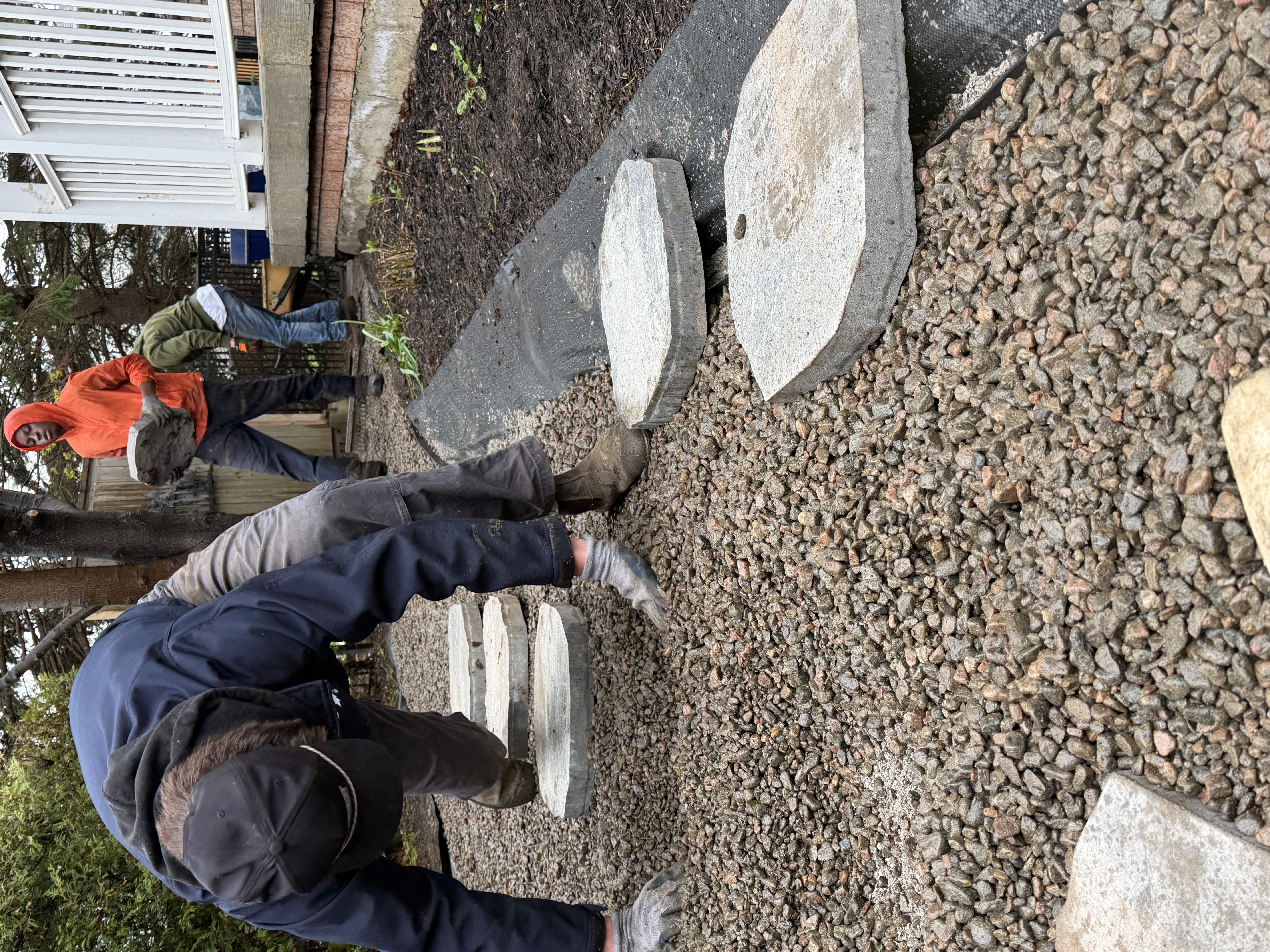
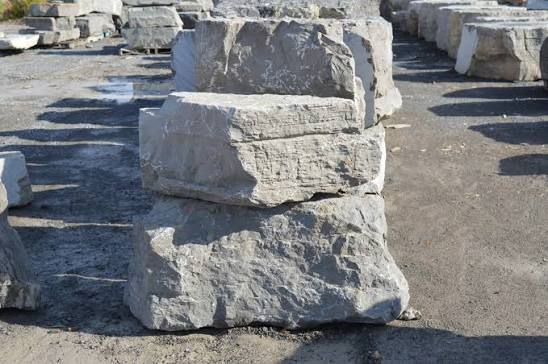
Interlocking Pavers for Driveways

While pathways and patios require special attention because they differ structurally from driveways, driveways require a different approach because of the vehicle traffic they receive. Driveway interlock must be designed with the property's traffic and conditions in mind.
All elements, including base preparation, compaction, drainage and edge stability, will influence the performance of the finished structure. The layout must also account for connections to the garage, street, and other hardscape elements.
Another benefit of using interlocking pavers for a driveway is that you can remove individual units when repairs are needed. It means that, if the neighbouring sections of a driveway are in good condition, it might be possible to fix only one spot.
Patio Installation for Functional Outdoor Spaces

An interlocking patio design helps define an outdoor area for eating, sitting, entertaining, and other uses. However, consider the site's natural grade and drainage, not just a patio that fits a particular area.
There are several things to consider before starting patio installation.
For instance, you must consider furniture arrangement, access, slope, and site landscaping. Proper grading is important in order to avoid water from collecting against the house walls and on the low areas of the patio.
The patio paving pattern may also affect its overall look and composition. Borders, contrasting layouts, and paving-stone size help define areas without complicating the overall look.
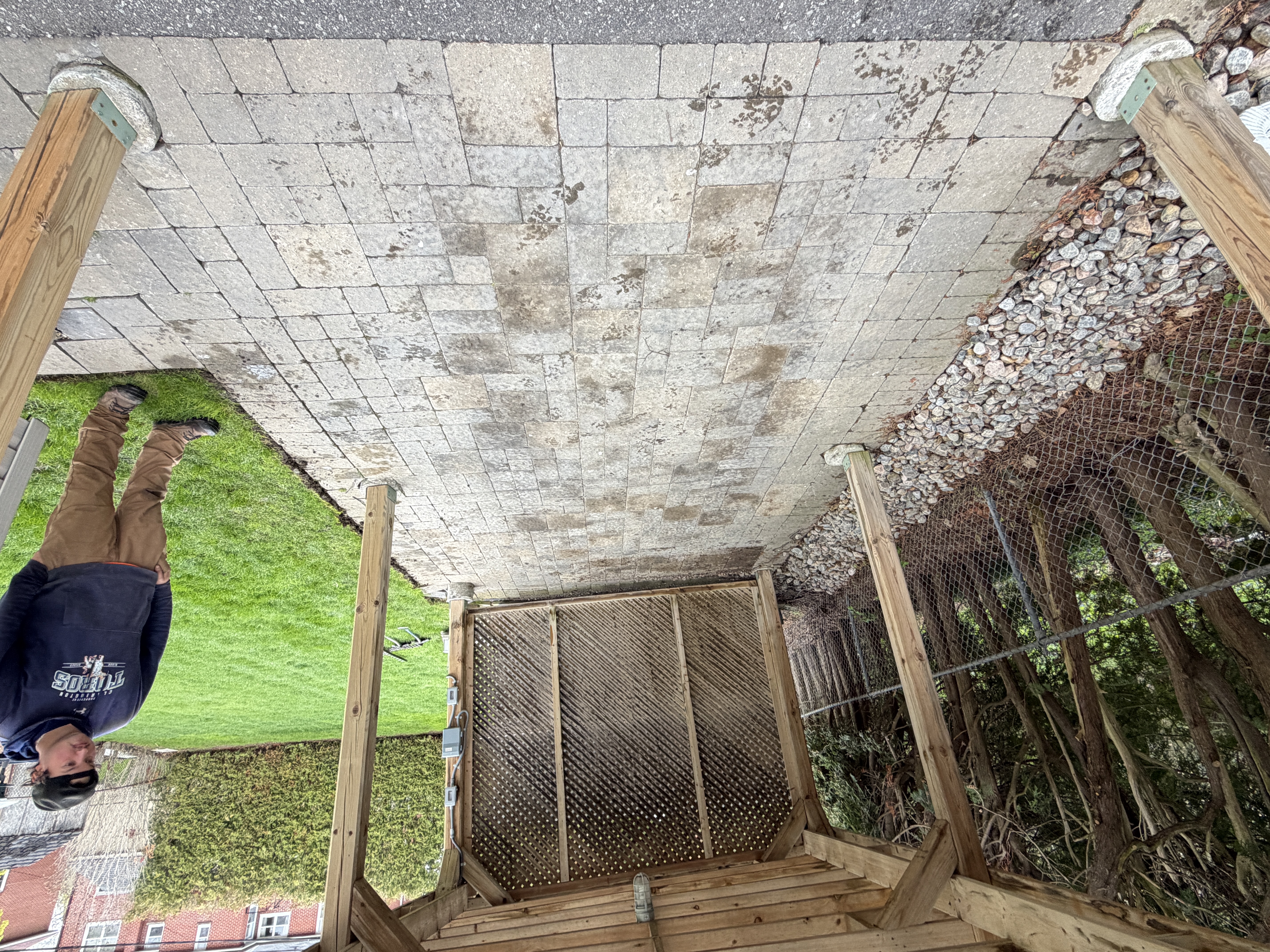
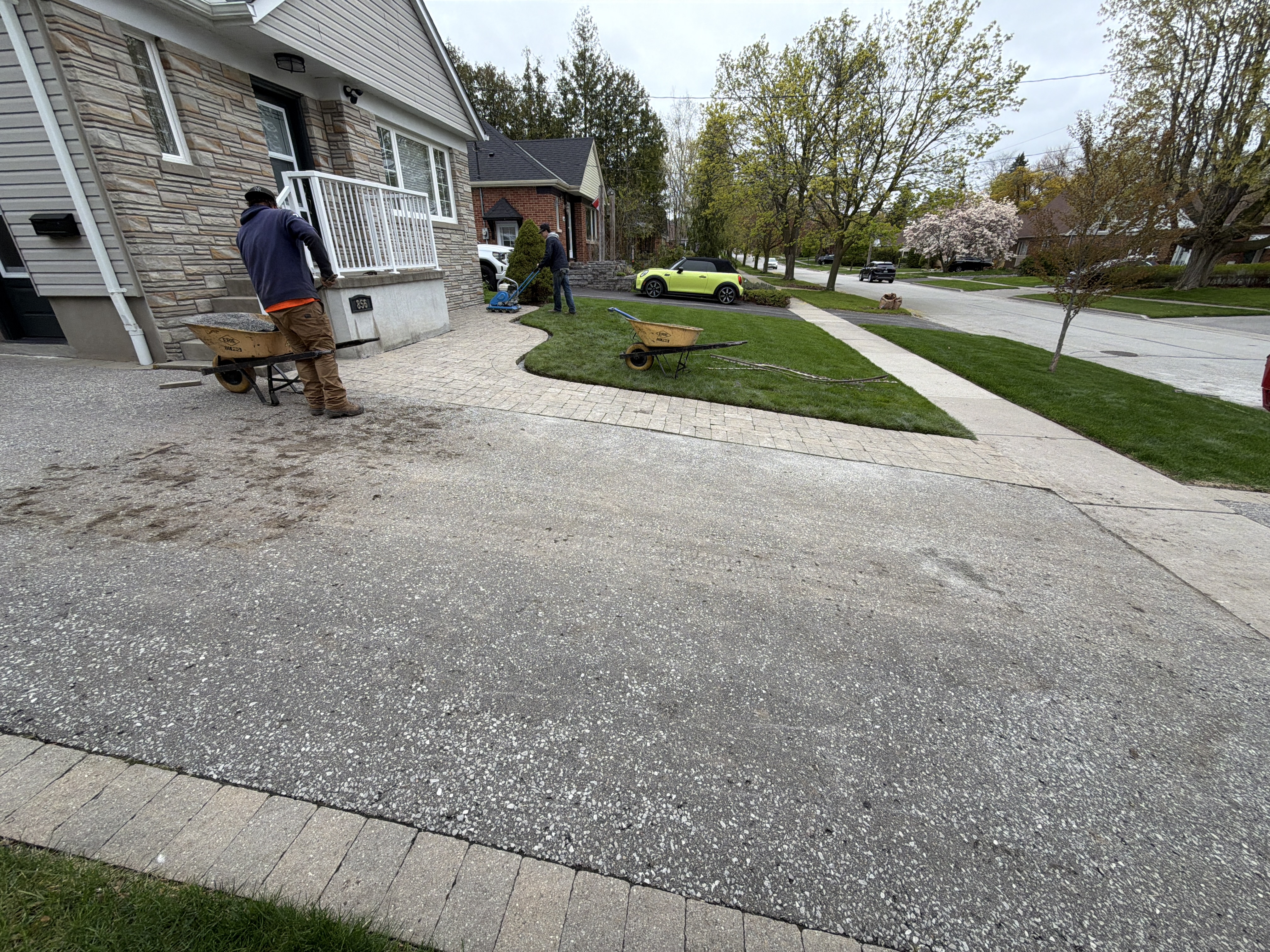
Walkway Installation for Clear Property Access

A walkway serves as a defined path between different parts of your property. A walkway can run from the driveway to the house entrance, pass through the garden, or connect the patio to another outdoor area.
During walkway installation, focus not only on aesthetics but also on usability.
Interlock Renovations for Existing Surfaces
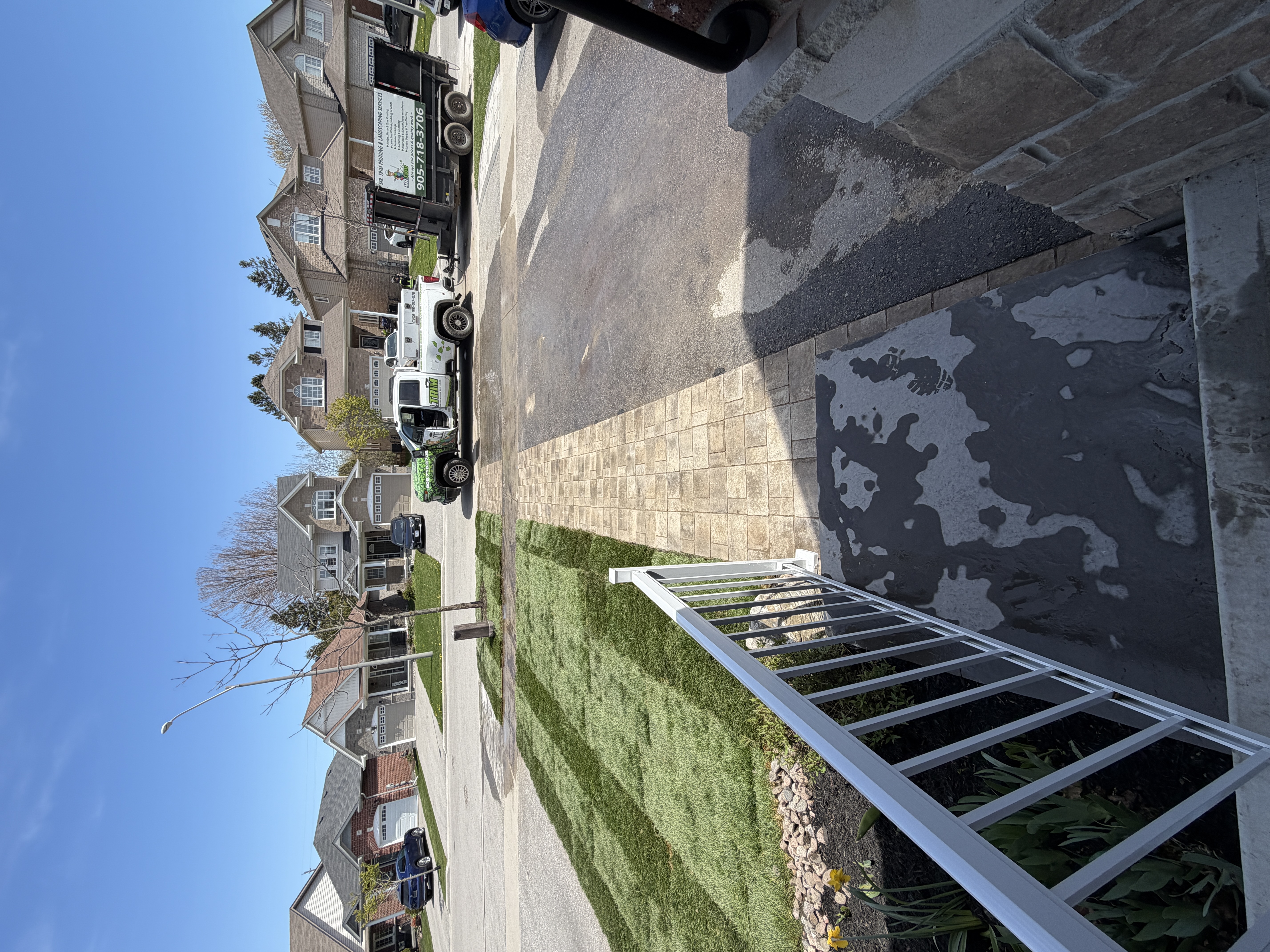
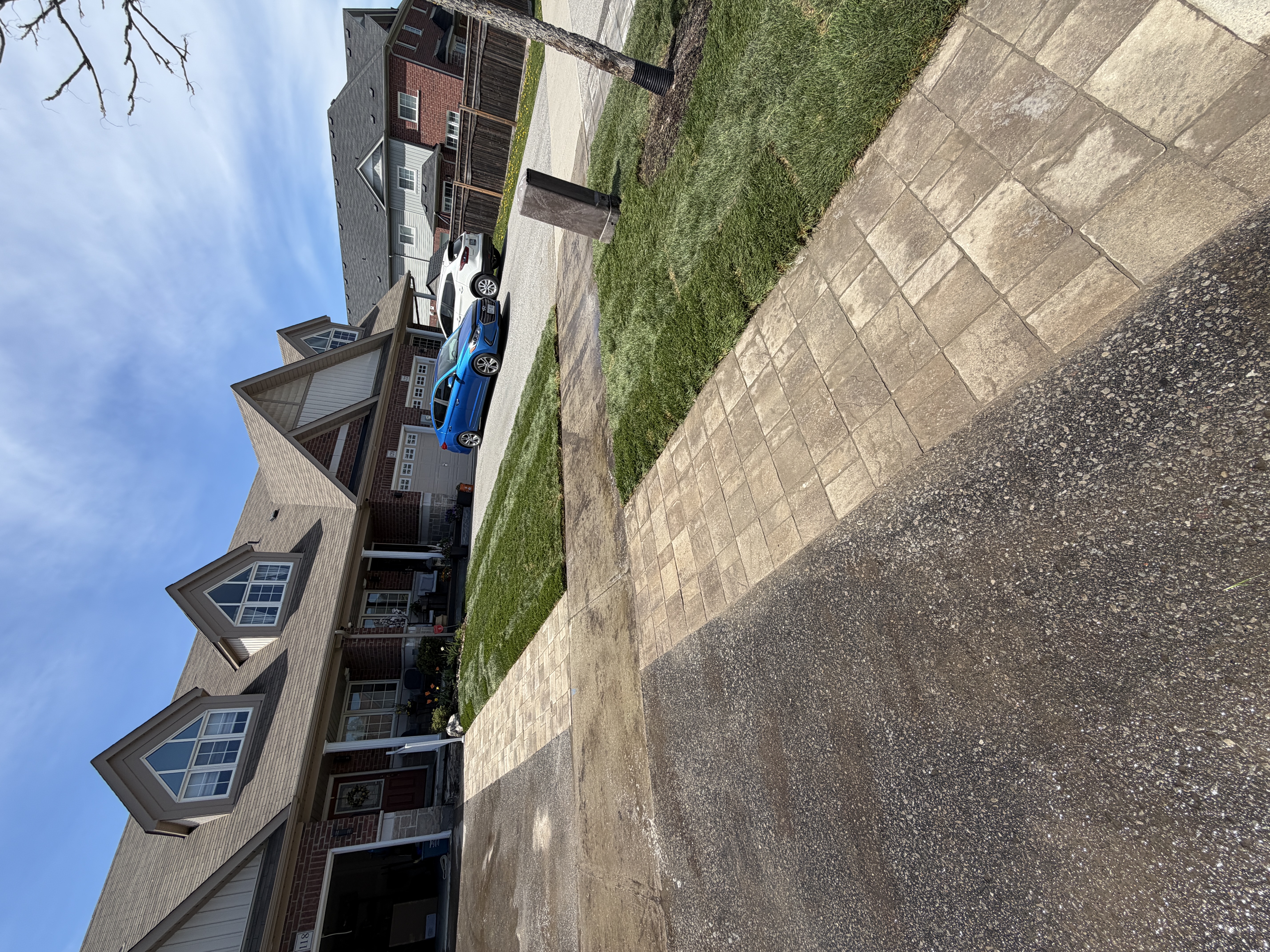
An existing interlocking surface doesn't always need to be completely removed when it starts to look worn or develop localized problems. Interlock renovations can be
appropriate when the pavers remain usable, but certain sections require correction or modification.
Renovation work may include:
● Lifting and resetting affected pavers
● Correcting localized settlement
● Replacing damaged or broken units
● Renewing deteriorated joints
● Modifying sections of an existing layout
● Improving the overall appearance of the installation
Assess the visible problem before choosing a repair method. For example, uneven pavers may be caused by movement in the underlying base or drainage problems rather than the pavers themselves.
Interlock Restoration and Repair
Over time, exposure to weather, moisture, regular traffic and seasonal ground movement can affect an interlocking surface. Common signs that restoration may be required include sinking sections, uneven pavers, damaged units, excessive weed growth and deteriorating joints.
Interlock restoration addresses these issues while retaining as much of the existing installation as practical.
A typical restoration project may involve:
1. Identifying the sections affected by movement or deterioration.
2. Removing the pavers from the affected area.
3. Examining and correcting the underlying surface where necessary.
4. Reinstalling suitable existing pavers or replacing damaged units.
5. Restoring the joints and checking the finished area for proper alignment and drainage.
Because interlocking consists of individual pavers, localized restoration can often be more targeted than replacing an entire continuous surface.
Step Installation and Changes in Elevation
Changes in elevation between a driveway, patio, garden or entrance may require properly planned steps. Step installation should account for the height of the rise, the available space, and how the steps connect with surrounding hardscape.
Individual steps should create a comfortable, consistent transition rather than an abrupt change in level. Also consider how the steps connect to adjoining patios and walkways during planning.
Interlocking steps can be incorporated into a larger hardscape design to create a more cohesive transition between different property levels.
Choosing the Right Interlocking Solution
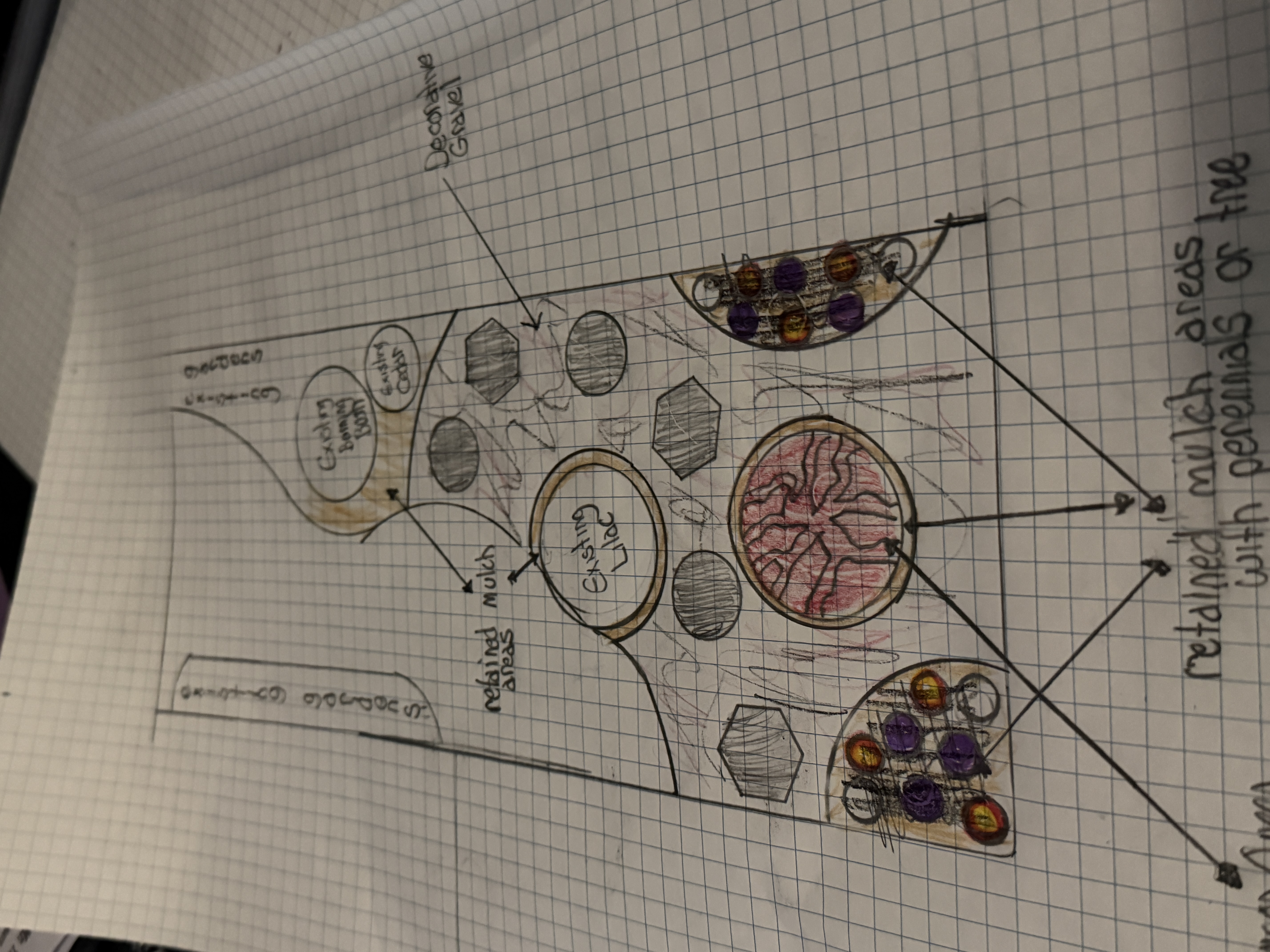
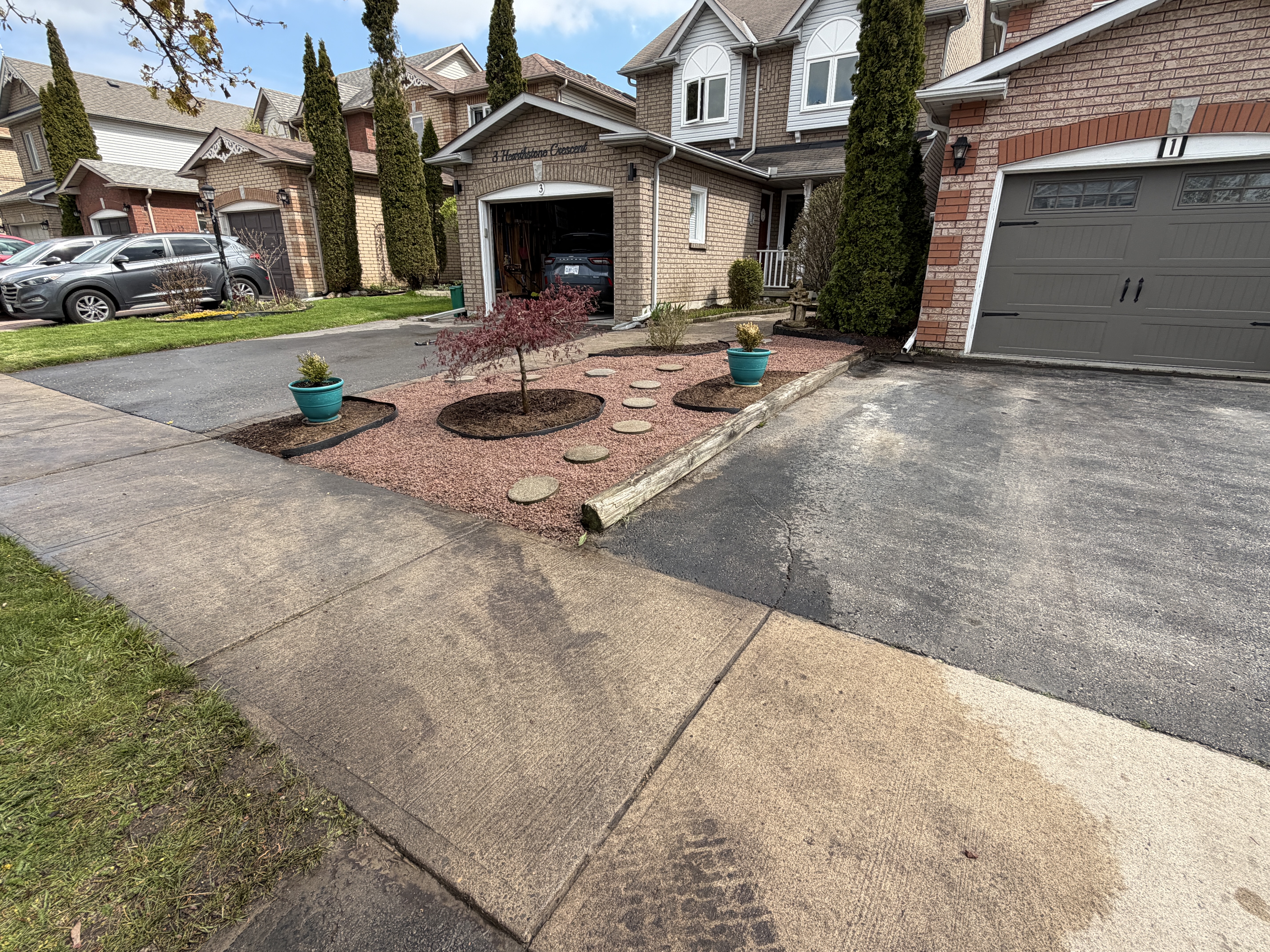
The right interlocking approach depends on what the surface needs to do. A driveway needs to accommodate vehicle traffic, while a walkway needs to provide convenient pedestrian access. A patio may place greater emphasis on usable space and integration with outdoor living areas.
At Mr. Trim Pruning, we can therefore approach the project based on the property's specific requirements rather than treating every interlocking surface the same way. Whether you need a new installation, an updated patio, a defined walkway, driveway interlock, steps or restoration of an existing surface, understanding the site's conditions is an important first step.
FAQs
How long does an interlocking project take?
The timeframe depends on the size of the area, site preparation, accessibility, design complexity and whether the project involves a new installation or restoration. A small walkway will generally require less work than a complete driveway or patio.
Can existing interlock be repaired?
Yes. If the existing pavers are still in good condition, you can lift and reinstall affected areas after correcting the underlying issue. We can replace damaged pavers where necessary.
Why does interlock become uneven?
Uneven or sinking pavers can result from several factors, including inadequate base preparation, settlement, drainage issues, erosion or movement beneath the surface. Identifying the cause is important before carrying out repairs.
Is interlocking suitable for driveways?
Interlocking pavers can be used for residential driveways when the installation is properly designed for vehicle traffic. Driveways require suitable base preparation, compaction, drainage and edge support.
What is involved in interlock restoration?
Restoration can involve lifting affected pavers, correcting the underlying area, replacing damaged units and restoring the joints. The exact work depends on the condition of the existing installation.
Contact Us
Service Hours
Social Media
Monday - Friday: 24 Hours A Day
Saturday: 24 Hours A Day
Sunday: 24 Hours A Day


Contact Us
55 Pomeroy St, Bowmanville, ON L1C 0A1
Service Hours
Monday - Sunday: 24 Hours A Day
Social Media


2026 | Mr.Trim Pruning and Landscaping Services | Sitemap